
Last Updated: November 22, 2026
Quick Summary
The most reliable way to spot fakes is to compare the label, artwork and print quality against a known authentic copy, then check the shell, screws, weight and board markings. How to spot fake retro video games comes down to side-by-side checks rather than a single telltale flaw.
- Compare the title font and spelling against a genuine copy of the same game.
- Check that the ESRB rating and logo are present, sharp and correctly sized.
- Look for pixelated artwork edges and misaligned colour plates on the label.
- Inspect screws, shell fit, weight and factory codes during an in-person check.
- Use a cartridge reader and compare ROM hashes for a definitive verification.
Table of Contents
- Why Reproduction Retro Games Are So Common Now
- How to Spot Fake Gameboy Advance Games by the Label and Artwork
- Reproduction vs Authentic Game Labels: Side-by-Side Checks
- How to Open Retro Game Cartridges Safely to Inspect the Board
- Physical Inspection Checklist: Shell, Screws, Weight and Factory Codes
- Digital Tools and Regional Variants for Verifying Authenticity
- Risks of Playing Reproduction Retro Games on Your Console
- Buying Verified Retro Hardware Next: Your Next Step
- Frequently Asked Questions
Why Reproduction Retro Games Are So Common Now
Reproduction cartridges have flooded the retro market, and many of them look convincing at first glance. If you are shopping for vintage games in 2026, learning how to spot fake retro video games is the single most useful skill you can build.
The short answer is that cheap reproductions are easy to make and hard to distinguish from a photo. Bootleg labels can be printed from scanned artwork, and shells can be moulded from common plastics. Many buyers only discover the problem after the game refuses to boot, which is why careful inspection before purchase matters.
Playing reproduction games carries its own risks, which we cover later in this guide. For a step-by-step walkthrough of loading and managing games on a handheld, see How to Add Games to Your Handheld. For now, the goal is simple: give you a repeatable way to check what you are buying.
How to Spot Fake Gameboy Advance Games by the Label and Artwork
Start with the label, because it is the easiest place for a counterfeiter to slip.
Work through these checks in order:
- Compare the title font against a known authentic copy of the same game.
- Look for spelling errors and typos in the game name, publisher line, and fine print.
- Check that the ESRB rating and logo are present, correctly sized, and sharply printed.
- Inspect the artwork edges for pixelation, which indicates a low-resolution scan.
- Confirm the colour saturation looks natural rather than washed out or overly bright.
A common approach is to keep a reference photo of a genuine label on your phone and compare side by side while you examine the listing or the item in hand. Small differences in font weight or spacing often reveal a reproduction more clearly than any single flaw.
Reproduction vs Authentic Game Labels: Side-by-Side Checks
Comparing a suspect label against an authentic one is the most reliable way to build your eye. Place the two next to each other and focus on the details that counterfeiters tend to get wrong.
Look first at print quality. Authentic labels usually have crisp, even ink with no visible dot patterns when viewed closely. Reproductions may show a faint grid or halftone texture from the scanning process, especially in gradients and skin tones.
Next, check the registration of the artwork against the border. On genuine labels, the colour blocks sit precisely within their frames. On many bootlegs, one colour plate is slightly offset, leaving a thin halo or misaligned edge.
Finally, compare the paper or label stock. Genuine labels feel consistent in thickness and finish. If the label peels too easily or feels unusually glossy or thin, treat that as a warning sign.
How to Open Retro Game Cartridges Safely to Inspect the Board
Sometimes the label alone is not enough, and the only way to be certain is to look inside. Opening a cartridge requires care, and you should only do so on an item you own or have permission to examine. Many cartridges use security screws that need a specific bit, so prepare the correct tool before you start.
Work on a clean, well-lit table with a soft cloth underneath to protect the shell. Remove the screws slowly, keep them in a labelled tray, and lift the top shell straight up rather than prying at the seams. Note the orientation of the board before you touch anything.
Once open, look for the factory markings and the component layout. Authentic boards usually show clean soldering and consistent trace lines. If you are uncertain, do not force anything. A cautious inspection beats a broken cartridge.
Checking the PCB, ROM chip and solder quality
The printed circuit board tells you a great deal, and this is where a side-by-side comparison against a known authentic board pays off. Examine the ROM chip for its markings and check whether the surface looks original or appears re-labelled.
Clean, even solder joints around the chip and the pin connector are a good sign. Blobby, uneven or dull solder often points to rework or a cheap clone.
Compare the gold contacts on the edge connector as well. Worn but even contacts are normal on used games. Patchy plating or obvious scratches across the whole edge can suggest a board that has been replaced or repaired.
If you want a definitive answer, a cartridge reader or dumper can pull the ROM data off the board and let you compare it against a known-good hash for that game.
Physical Inspection Checklist: Shell, Screws, Weight and Factory Codes
Use this checklist whenever you handle a cartridge or console in person:
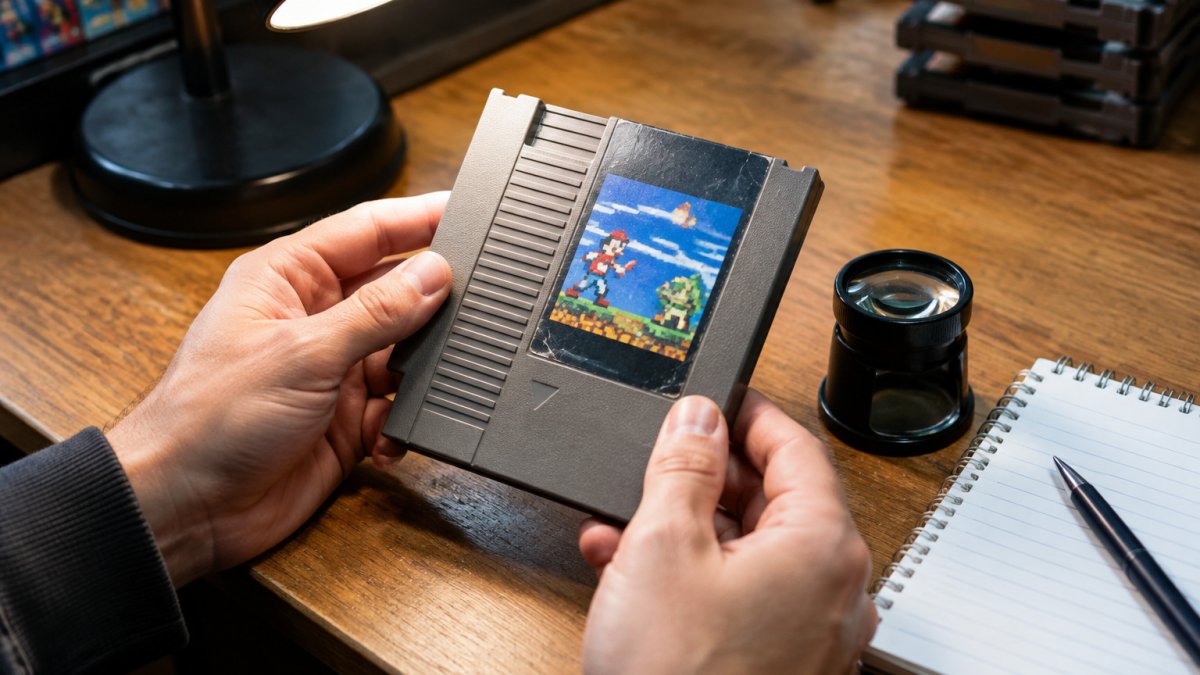
- Shell plastic matches the colour and texture of known originals
- Security screws are present and not stripped or replaced with ordinary screws
- The item feels a sensible weight for its size; large discrepancies are suspicious
- Imprinted factory codes are present, legible and consistent with the game
- The shell fits together cleanly with no gaps or mismatched seams
- The pin connector and gold contacts show even wear, not fresh replating
Weight is a quick test many collectors overlook. Reproduction shells often use lighter or heavier plastic than originals, so a noticeable mismatch is worth investigating further.
The checklist below sums up the physical checks covered above, so you can run through them quickly in person.
| Check | What to look for | Why it matters |
|---|---|---|
| Shell plastic | Colour and texture match known originals | Reproduction shells often differ |
| Security screws | Present and not stripped | Replaced screws suggest tampering |
| Weight | Sensible for its size | Large mismatches are suspicious |
| Factory codes | Present, legible, consistent with the game | Missing or odd codes flag fakes |
| Shell fit | Clean seams, no gaps | Mismatched parts show a rebuild |
| Pin connector | Even wear, not fresh replating | Fresh plating suggests a repaired board |
Digital Tools and Regional Variants for Verifying Authenticity
Beyond physical checks, a few digital steps can strengthen your verification, and regional variants are where many buyers get caught out. This section covers both the digital tools and the regional nuances that collectors should consider.
Using cartridge readers and ROM hash verification
A cartridge reader or dumper is the closest thing to a definitive test. These devices connect to a computer and read the ROM data directly off the cartridge, and you then compare the resulting file against a known-good hash for that exact game and region. Preservation databases and community-maintained ROM sets publish checksums for verified dumps, so a mismatch is strong evidence of a reproduction or a damaged board. The trade-off is cost and setup, since a reader is an investment and only helps if you already own the cartridge or can persuade a seller to let you test it. For high-value purchases, some collectors ask sellers to provide a dump or a photo of the board before paying.
Regional variant authentication: PAL and Japanese releases
Regional variants are where authentication gets genuinely tricky, because a cartridge that looks wrong for one region may be perfectly correct for another. Japanese Super Famicom cartridges, for example, use a different shell shape and label layout from the North American Super Nintendo, and PAL releases often carry different rating marks, different publisher branding, and different cartridge codes.
Before you call a cartridge fake, confirm which region it was actually sold in and compare it against a documented example of that specific variant. Community databases and collector forums maintain photo references for regional releases, and matching the label code, the shell moulding, and the board markings against the correct regional example is far more reliable than assuming any authentic copy will do. Watch out: a cartridge that looks like a mismatch for the US market may simply be a legitimate Japanese or European release, so verify the region before you reject it.
Reverse image searches and listing checks
Use reverse image searches on listing photos to see whether the same images appear across unrelated sellers, a common sign of stolen or copied product photography. Community databases of known releases can also help you confirm a particular print run. These checks are quick, free, and catch the laziest fakes before you ever handle the cartridge.
Risks of Playing Reproduction Retro Games on Your Console
Beyond the question of value, reproductions can cause practical problems. Poor-quality boards may fail to save progress, corrupt data, or behave erratically on original hardware. Cheap connectors can wear down the slot in your console, which is an expensive repair to put right.
There is also the ethics and legality of 'repros' to consider. Reproduction cartridges that sell as originals mislead buyers and harm collectors, and they may infringe the rights of the original publishers. Buying or selling them knowingly is something most collectors would prefer to avoid.
If you simply want to play, choosing a reputable alternative avoids these issues entirely. Many players find that a verified modern device gives them the retro experience without the uncertainty of cartridges.
Buying Verified Retro Hardware Next: Your Next Step
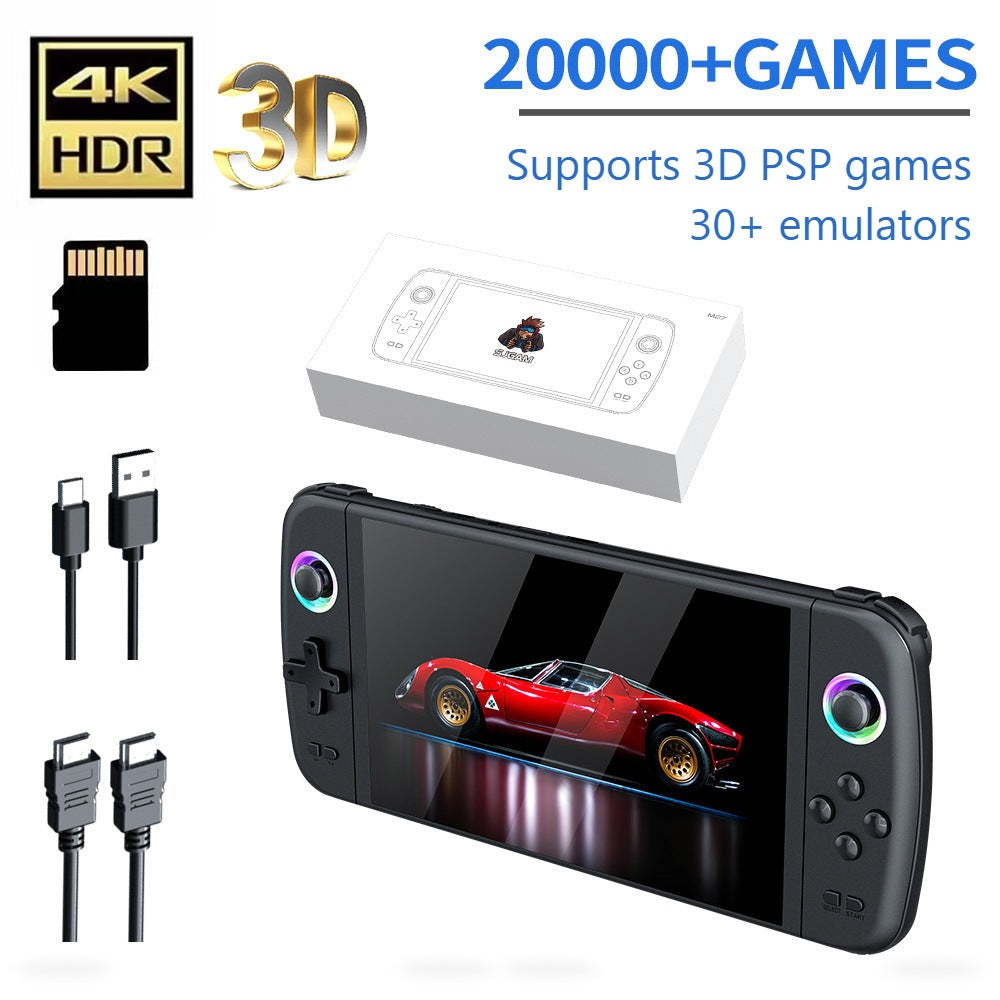
Learning to spot fakes is only half the job. The other half is buying from sources you can trust. If you want to play retro games without the guesswork, the Old Arcade offers retro handheld devices and retro TV consoles in its curated collection.
If you are still deciding whether a handheld is the right purchase, our guide on whether a handheld retro emulator is worth it in 2026 walks through the trade-offs. And if you are buying used hardware, our article on buying used game consoles covers what to check before you pay.
Pricing depends on the model, storage size and current stock, so check the Old Arcade website for up-to-date prices and availability. Free standard shipping applies on orders over $60, and there is an easy 30-day return policy.
Frequently Asked Questions
How can you tell if a retro game cartridge is authentic?
Start with the label, shell and printing. Authentic cartridges usually have crisp artwork, consistent font weight and no spelling errors. Check the ESRB rating logo and the Nintendo seal of quality where applicable. Then compare the shell plastic, screw type and any factory-imprinted codes against a known genuine copy of the same title. Weight can help too, since reproduction cartridges often feel lighter or heavier than originals. No single check is conclusive, so combine several before deciding.
What are the most common signs of a reproduction video game?
The most common signs are misspelled words on the label or back cover, blurry or pixelated artwork, colours that look washed out or oversaturated, and fonts that do not match the rest of the series. Reproductions also often use a different cartridge shell colour or texture, and may lack factory stamps. If the label looks printed on a home inkjet or the plastic shows seam marks that originals do not have, treat the game with caution before paying a collector's price.
Do fake retro games damage your console?
They can. Some reproduction cartridges use unreliable circuit boards, poor solder joints or incompatible ROM chips, which can cause freezing, graphical glitches or, in rare cases, electrical problems that affect the console's pin connector. Gold contacts that look dull or uneven are a warning sign. Test unfamiliar cartridges briefly on a console you can afford to lose access to, and avoid forcing a cartridge that does not seat smoothly.
How do I tell if my DS game is real?
Compare the label and the cartridge shell with a known authentic copy, checking print quality, spelling and the ESRB rating. Look at the connector edge for clean gold contacts and check that the shell screws are standard, not unusual replacements. Boot the game and watch for missing audio, unusual loading screens or glitches in the title screen, which can point to a reproduction. If the game fails any of these checks, do not rely on it as a genuine release.

